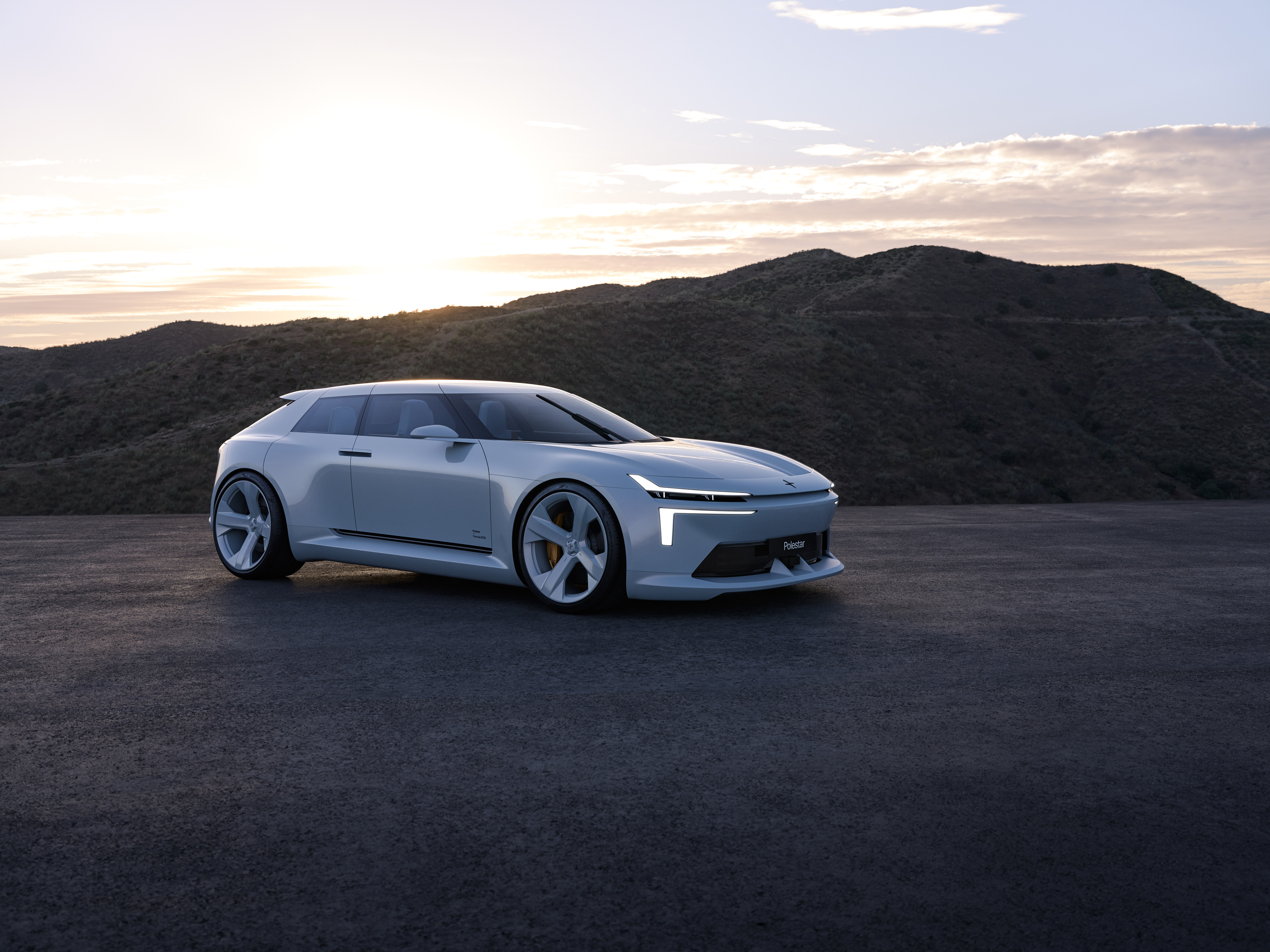
Polestar has given a first look at where its design is heading next with the Formula 2030 concept car. Named after the brand’s wider Formula 2030 strategy, the showcar is the first created under Head of Design Philipp Römers, and several of its design features are confirmed for the next-generation Polestar 2 due in 2027 and the upcoming Polestar 7.
What is it?
The Formula 2030 is a compact, low-slung, four-door electric sports car that sits in a segment of its own. At just 1,350 mm tall it is even lower than the Polestar 5 Grand Tourer, and in size it falls between the next Polestar 2 and the Polestar 7. Polestar describes it as a bold evolution of its existing design DNA, built around the same principle of removing the unnecessary, improving what remains and refusing to compromise.

| Specification | Polestar Formula 2030 concept |
|---|---|
| Body | Four-door, four-seat electric sports car |
| Length | 4,680 mm |
| Width | 2,021 mm |
| Height | 1,350 mm |
| Wheelbase | 2,780 mm |
| Wheels | 22-inch centre-lock |
| Driver display | 20-inch curved HyperDIM |
| Centre screen | 12.2-inch |
| Drive modes | Performance, Normal, Autonomous |
Exterior
At the front, the Dual Blade headlights are set into an aero wing and preview the face of the next Polestar 2. A shark nose, deep front splitter and a single vertical wiper on a wraparound, visor-style windscreen give it a motorsport feel, while a LiDAR unit stays hidden under an aerodynamic cover until the autonomous mode is used. At the rear, Polestar drops its familiar full-width lightbar in favour of new Single Blade tail lights, which are set to reach production. A centrally mounted rear wing and a lower diffuser underline its performance focus.

A cabin that changes with the drive mode
Inside, the cockpit is centred on the driver. A 20-inch curved HyperDIM display is mounted directly on the steering column, and the cabin physically adapts to the selected drive mode. In Autonomous mode, the centre screen stands upright and the seat and steering wheel move apart; switching towards Performance lowers the screen flush into the dashboard and pulls the wheel closer to the driver.
Polestar is also bringing back physical controls. Eight customisable buttons and dials sit below the centre screen and can be configured both physically and digitally, while Google Gemini provides a conversational AI assistant, as in Polestar’s production cars.

“It is a physical embodiment of how we apply Polestar’s core values of design, performance and sustainability to the next production cars.”
Philipp Römers, Head of Design, Polestar
Sustainable materials
The concept also pushes Polestar’s materials strategy forward. The door interiors follow a mono-material approach for full recyclability, exposed structural parts such as the seat frames use low-emission steel, and the seat backs are made from a bio-based composite of European flax and bio-based polypropylene. In the boot, the exposed body structure uses Bcomp’s natural fibre composite.

Why it matters
With the next Polestar 2 arriving in 2027 and the Polestar 7 compact SUV planned for production in Europe, the Formula 2030 shows how the brand intends to stand out in an increasingly crowded EV market: sharper performance styling, a stronger focus on the driver and a return to physical controls, at a time when many buyers are pushing back against touchscreen-only cabins.
News Courtesy: Polestar
Image Courtesy: Polestar

Leave a Reply