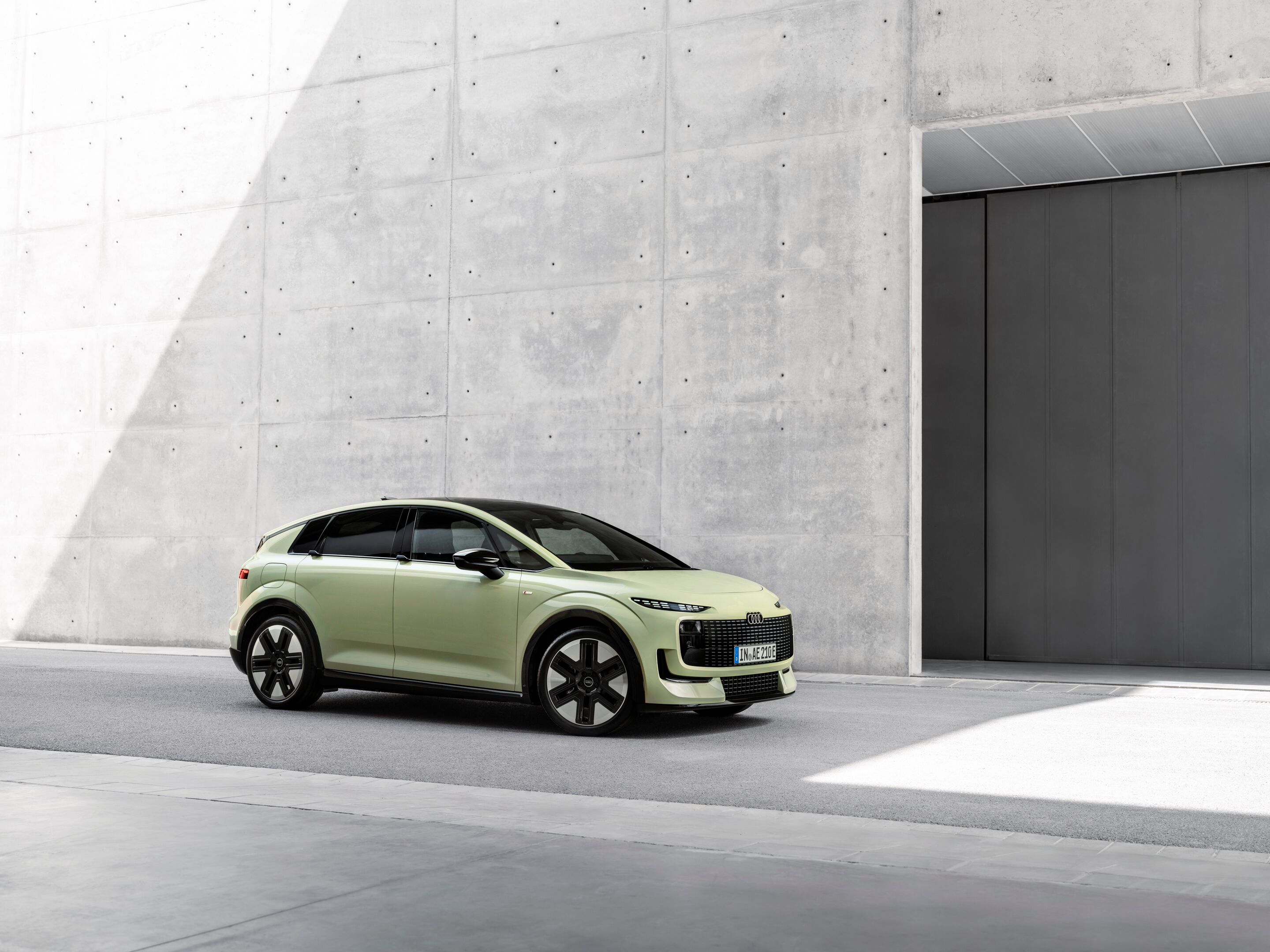

Audi calls the new A2 e-tron its most efficient model ever, and the company has now explained what sits behind that claim. Alongside aerodynamics and battery technology, the key lies in an upgraded electric drive in which the power electronics, the electric motor and the transmission have all been reworked to waste less energy and run more quietly. With the optional efficiency package, the 140 kW version achieves a WLTP combined consumption of just 12.8 kWh per 100 km.
What is it?
The A2 e-tron uses the APP350, a permanent-magnet synchronous motor (PSM) from the Volkswagen Group. It is mounted at the rear, parallel to the axle, and runs on a 400-volt system. The APP350 is a further development within the Group’s MEB electric platform and is offered in three power levels, 125 kW, 140 kW and 170 kW, with up to 350 Nm of torque.
| Specification | Audi A2 e-tron drive |
|---|---|
| Motor | APP350 permanent-magnet synchronous motor, rear |
| Power levels | 125 kW / 140 kW / 170 kW |
| Max. torque | Up to 350 Nm |
| System voltage | 400 V |
| Inverter | Silicon carbide (SiC) MOSFETs, over 97% efficient |
| Gear ratio | 10.21:1 (125/140 kW), 11.53:1 (170 kW) |
| Consumption (WLTP) | From 12.8 kWh/100 km (140 kW, efficiency package) |
Silicon carbide power electronics
The biggest step is in the newly developed pulse inverter, which converts the battery’s direct current into alternating current for the motor. Audi has replaced the previous silicon bipolar transistors with silicon carbide (SiC) MOSFETs, which cut switching losses and push the inverter’s efficiency above 97%. An adaptive strategy also lowers the switching frequency whenever possible, which saves energy especially in town and on country roads at medium speed and load. Better energy use means the inverter can still deliver full power when the battery’s state of charge is low.
A leaner, more efficient motor
Compared with its APP310 predecessor, the APP350’s rotor is more than 30% thinner, reducing iron losses. The stator winding has been switched from a star to a delta configuration with fewer parallel branches, improving efficiency in the part-load range where most everyday driving happens. According to Audi, these changes raise efficiency without giving up any torque or power.

Low-friction transmission
The compact, lightweight single-speed transmission uses a ratio of 10.21:1 for the 125 kW and 140 kW versions and 11.53:1 for the 170 kW model, keeping motor speeds low. Fine-machined gear teeth with smoother flanks reduce friction, while a low-viscosity transmission oil and optimised oil routing cut churning losses.
Quieter on the move
Efficiency is only half the story. The rotor segments are now staggered rather than arranged in a straight line, which avoids first-order vibrations and almost eliminates the typical tonal whine, especially when pulling away. On top of that, the inverter adds high-frequency harmonic components to the motor current to cancel out disruptive noise depending on the operating point. The result, says Audi, is a noticeably quieter cabin.
Why it matters
As EV prices come down, efficiency is becoming the new battleground: every kilowatt-hour saved means a smaller, cheaper battery for the same range, or more range for the same money. The A2 e-tron shows that big gains no longer come from one breakthrough but from many small improvements across the whole drivetrain, with silicon carbide electronics now moving from premium models into compact cars.
News Courtesy: AUDI AG
Image Courtesy: AUDI AG

Leave a Reply