
What are they?
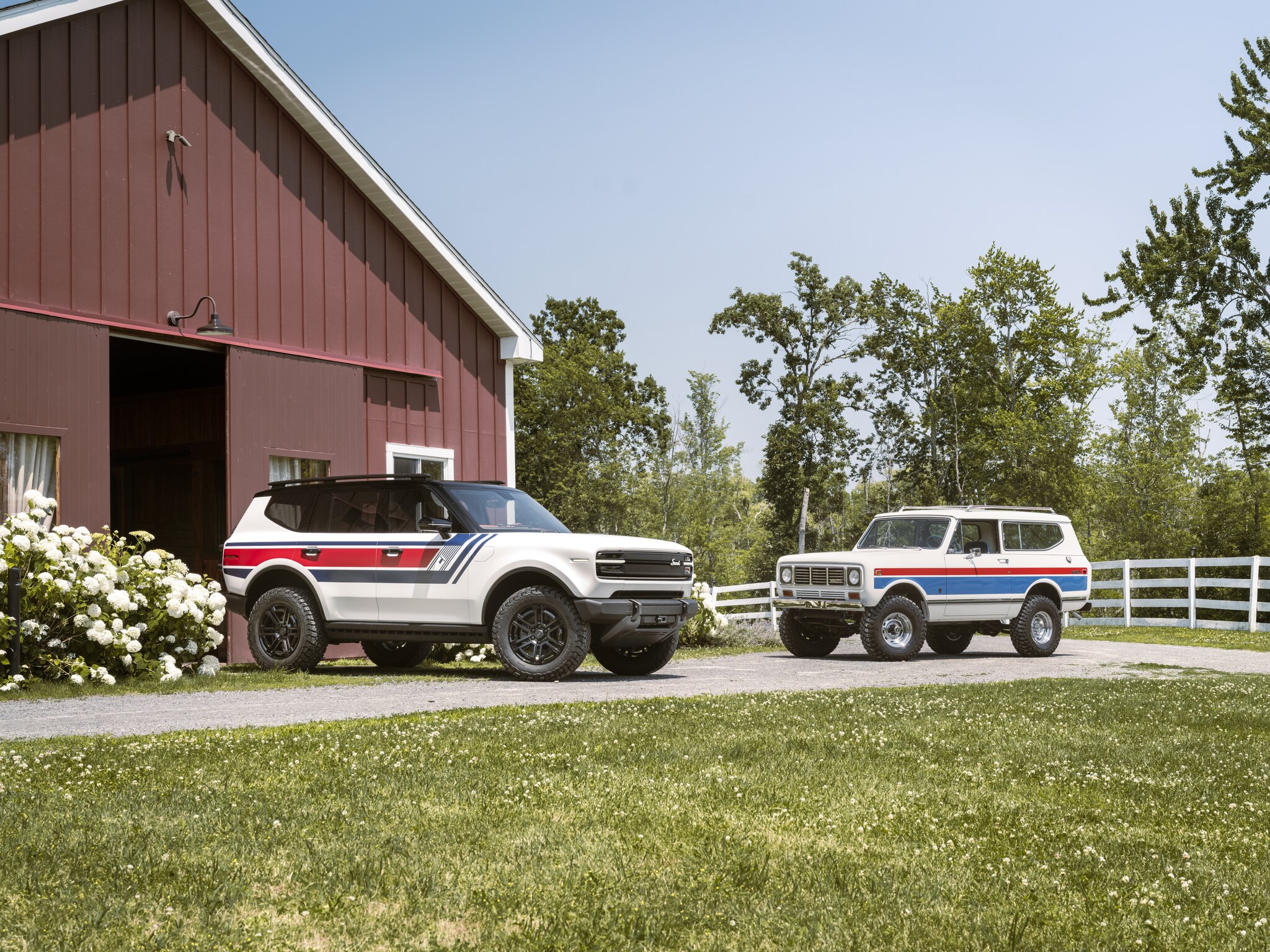
The Scout Traveler and Scout Terra are the first vehicles from Scout Motors, an American automotive company developing rugged electric vehicles for a market increasingly dominated by Rivian, along with titans like the GMC Hummer EV and Tesla Cybertruck. The Traveler is a full-size SUV designed for families, camping and long-distance exploration, while the Terra is a pickup intended to combine everyday usability with serious work and off-road capability.
Both vehicles are built around body-on-frame construction, four-wheel drive and a solid rear axle. The Traveler offers seating for up to six, generous cargo space and a design intended to accommodate both daily driving and remote adventures. The Terra adds a 5.5-foot pickup bed, a 240-volt power outlet and additional storage, giving it the character of a mobile workshop as much as a recreational vehicle. Pure electric versions are projected to provide up to 350 miles of range, while models equipped with Scout’s Harvester range extender are expected to exceed 500 miles in total range. These figures remain manufacturer projections and may change before production.
The two vehicles are not simply conventional SUVs and trucks converted to electric power. Scout is attempting to reinterpret the traditional American off-road vehicle for a new technological era, combining battery power, modern connectivity and fast charging with mechanical features such as locking differentials, a solid rear axle and physical controls.
Heritage, Ownership and Origins
The Scout name began with International Harvester, an American manufacturer best known for agricultural machinery, trucks and industrial equipment. In 1960, International Harvester introduced the Scout 80, with production beginning for the 1961 model year. The vehicle combined the usefulness of a farm tool with the comfort and practicality of a family vehicle, helping establish the concept of the sport utility vehicle long before SUVs became a dominant part of the global car market.
Original Scout vehicles were produced from 1961 until 1980. Their appeal came from a distinctive combination of simplicity, toughness and versatility. They could transport families during the week, support agricultural work during the day and travel far beyond paved roads at the weekend. Scout Motors is attempting to preserve that identity without reproducing the limitations of a vehicle designed more than half a century ago.
The modern company was created after Volkswagen Group acquired Navistar, the successor to International Harvester’s truck business, in 2021. Through that acquisition, Volkswagen obtained the rights associated with the Scout brand. Volkswagen later approved the creation of Scout Motors as an independent American company focused on designing, manufacturing and selling electric trucks and SUVs in the United States. Scout Motors remains independently positioned as a brand, but it is backed by Volkswagen Group and benefits from the group’s manufacturing expertise and financial support.
The company’s design and engineering operations are based in Michigan, within the wider Detroit automotive tradition. The vehicles are intended to be designed and engineered in the Motor City, while production will take place in South Carolina. This arrangement gives the Traveler and Terra a distinctly American identity while connecting them to one of the world’s largest automotive manufacturing groups.

Exterior Design and Character
The Traveler and Terra are deliberately different from the smooth, aerodynamic appearance adopted by many modern electric vehicles. Their upright proportions, squared-off bodywork and broad stance recall the original Scout without becoming simple retro replicas.
The Traveler’s silhouette is particularly successful because it combines a strong vertical front end with a clean, modern side profile. Its shape looks substantial without appearing excessively ornate. A large retractable roof creates an open-air experience, while the front trunk provides additional seating or storage at campsites, tailgates and scenic stops. A swing-out spare-wheel carrier also preserves interior cargo space, allowing equipment such as coolers, folding chairs and outdoor gear to remain inside the vehicle.
The Terra follows the same design philosophy but gives it a more functional form. Its broad shoulders, upright cabin and short 5.5-foot bed create the appearance of a traditional American pickup, while details such as the retractable rear window and available power outlets add a recreational dimension. The truck is intended to work at a construction site, carry outdoor equipment and serve as a base for camping without losing visual appeal.
Both vehicles use a distinctive front design inspired by earlier Scout models. The face is simple and recognisable rather than dependent on an oversized grille, which is particularly appropriate for electric vehicles. NACS charging ports are integrated into the front fenders, with CCS compatibility available through an adaptor. The result is a visual language that combines heritage, utility and modern electric technology.

Interior Design and Materials
The interiors are designed around the idea that an adventure vehicle should be durable without feeling cheap. Scout Motors describes the materials as rugged and yet they are designed to be comfortable comfortable and intended to last, but the concepts go further than simply covering every surface in hard plastic. The cabins use clean forms, contrasting textures and carefully selected colours to create an atmosphere closer to a well-designed outdoor product than a conventional work truck.
One of the most interesting materials is sustainably sourced hemp wood, used as an interior trim element. The material provides the visual warmth of wood while giving the cabin a more contemporary and environmentally conscious character. Scout’s design teams have also explored rich colour combinations, textured surfaces and durable upholstery intended to withstand muddy boots, outdoor equipment and everyday family use.

The Traveler’s cabin is spacious enough for up to six occupants, with storage designed around the realities of travel and recreation. The Terra offers a front bench seat, allowing seating for up to six and reinforcing the truck’s communal, practical character. Both interiors avoid the increasingly common approach of replacing nearly every function with a touchscreen. Physical knobs and buttons remain central to the driving experience, making climate and vehicle controls easier to operate while moving over rough surfaces.

Technology is still an important part of the cabin. Scout Community UX allows passengers to interact with the vehicle’s digital system, while the driver remains focused on the road. The concept is unusual because it treats the passenger as an active participant rather than forcing the driver to control every digital function. Materials, colours, wheels and accessories are also intended to be configurable, allowing owners to create different loadouts for camping, work, travel or family use.

Off-Road Engineering and Everyday Use
The Traveler and Terra are designed to be credible off-road vehicles rather than lifestyle products with an adventurous appearance. Both use four-wheel drive, body-on-frame construction and a solid rear axle. The Traveler is planned with front and rear locking differentials, while the Terra adds front and rear mechanical locking differentials, giving both vehicles the ability to maintain traction when individual wheels lose grip.
The Terra is especially focused on utility. Its 240-volt onboard outlet, four 120-volt outlets and up to six USB-C ports allow the truck to operate as a mobile power station. Tools, camping equipment and small appliances can be powered away from the electrical grid, extending the vehicle’s usefulness beyond transportation. The Traveler offers a similar outdoor focus through its retractable roof, front trunk, cargo flexibility and storage systems.
Fast charging is supported by an 800-volt electrical architecture, with charging capability expected to reach 350 kilowatts when connected to compatible equipment. Bidirectional charging is also planned, allowing the vehicles to provide power to external equipment or potentially support a home during an outage. Exact performance, charging times and final capacities will depend on the production specification.

The Harvester Range Extender
The most distinctive powertrain option is the Harvester range extender. Instead of using a gasoline engine to drive the wheels mechanically, Harvester uses a gas-powered generator to recharge the vehicle’s high-voltage battery. The electric motors remain responsible for driving the vehicle, meaning the acceleration response and electric four-wheel-drive characteristics are retained even when the generator is operating.
The system is expected to use a naturally aspirated Volkswagen Group four-cylinder engine. Scout has not yet released complete technical specifications, including engine displacement and output, but the purpose is clear: provide energy when charging infrastructure is unavailable or when long-distance towing and off-road travel make a pure battery-electric range less convenient. Scout estimates approximately 150 miles of electric driving before the range extender becomes necessary, followed by a combined range of more than 500 miles with a full fuel tank and a fully charged battery.
Harvester therefore addresses one of the central challenges facing large electric trucks and SUVs. Battery power is highly effective in urban driving and short-distance exploration, but remote travel, towing and severe weather can make access to charging more difficult. By acting as an onboard generator rather than a conventional hybrid transmission, Harvester aims to offer electric propulsion without requiring every journey to be planned around charging stations.

Production and Delivery
Scout Motors is constructing a new manufacturing facility in Blythewood, near Columbia, South Carolina. The project represents an investment of approximately $2 billion and covers an industrial site of about 1,100 acres. At full capacity, the factory is expected to support more than 4,000 jobs and produce as many as 200,000 vehicles annually. It will manufacture both the Traveler SUV and Terra pickup, making South Carolina the centre of Scout’s production strategy.
The official Scout website previously identified 2027 as the target for initial production, subject to change. More recent Scout customer information states that initial validation vehicles are expected during 2026 and that customer deliveries are expected to begin in 2028. Current reporting indicates that early customer deliveries are anticipated at the beginning of 2028, although final timing may vary by model, powertrain and production progress.
The Traveler and Terra represent a significant attempt to revive a historic American name while challenging the growing generation of electric trucks and SUVs from Rivian, GMC and Tesla. Their appeal rests not only on electric range, but on a broader philosophy: durable materials, physical controls, real off-road hardware and a design that feels connected to the American landscape. If Scout Motors can deliver the quality promised by its concepts, the brand may return not as a nostalgic curiosity, but as a serious new competitor in the electric adventure-vehicle market.

Image & News Courtesy: Scout Motors

Leave a Reply