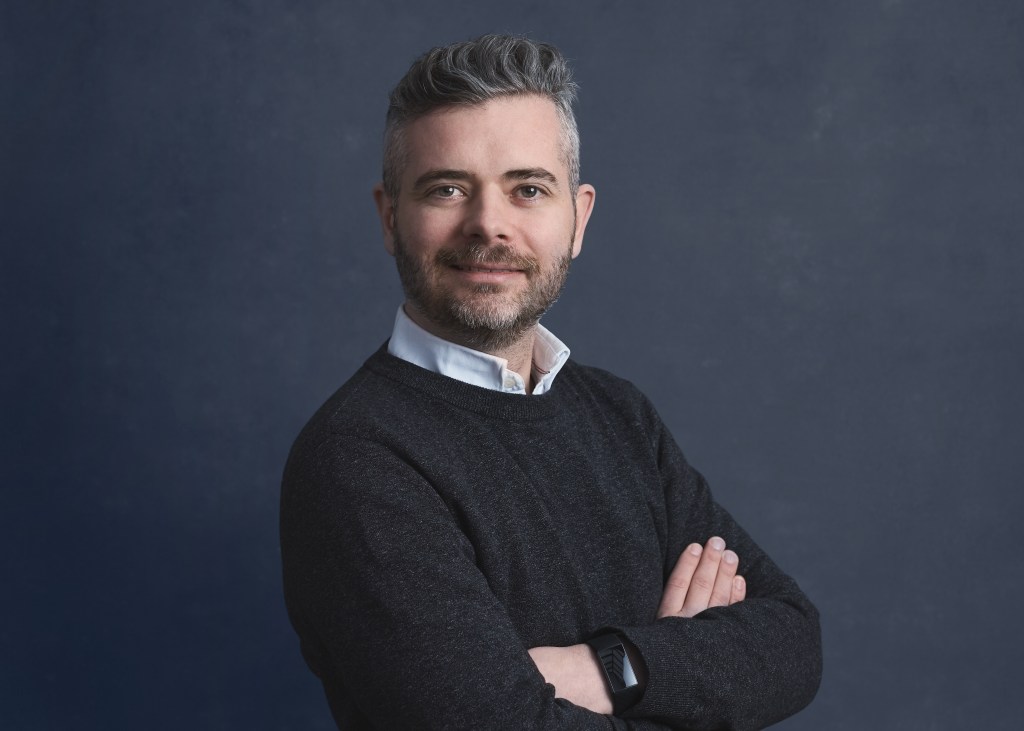
In our quest to meet people in the forefront of latest technologies, we speak to Mr. Christian Pedersen, CEO of Holo. Holo provides mobility and autonomous technologies and has been one of the industry firsts to operate autonomous vehicle pilot projects in the Nordic and Baltic region.
Christian shares with us his ideas on how autonomous technologies have seen an upward trend and how their operations have been until now. He also shares insights on how his company can give a jolt to any autonomous system and help the producers understand where and what they are lacking, with the help of data! You can find the excerpts from the profound conversation when we met Christian at IAA Mobility Munich 2021 below.
EV Cartel: Could you tell me about your journey with Holo so far? How did you start working with them and what do you do?
Christian: I come from a background in IT consulting, and I used to work for Accenture for around 5 years. I went to work for a bank for 16 months after that and got a little bored. Then I applied for the job of technology lead, which was not a perfect fit, but close enough owing to my interest in automation and autonomous vehicles. I had plenty of ideas and that convinced the previous CEO, and we shared great chemistry. Last year during the Corona crisis, our previous CEO had to leave the company. The company decided to bring in some changes in the setup and made me the CEO. It was a great challenge for me and was like a natural extension to what I already had been doing. Now, I spend a lot of time with potential future partners, who also work in the field of Autonomous vehicles.
EV Cartel: What does your startup do? What do you mean by integrator and operator of Autonomous Vehicles?
Christian: We deploy autonomous shuttles in the cities of Scandinavia and collect information from the operations to share it with the clients. We are someone like a local partner, who help these companies set up their vehicles, take care of day-to-day work, take care of the local legislation necessities, help them configure software and change it with changes in environment and legislation. Just like when you buy an SAP system or Office 365 or Salesforce, you don’t just start using it, but you make your own customizations and that’s what we help other companies achieve with their autonomous shuttle deployments.
EV Cartel: Is your startup funded?
Christian: We are owned by the largest car importer in Denmark, the Semler Group. They import & sell Volkswagen Group vehicles here in Denmark. With new business avenues starting to open, Semler already has started working in the fronts of car leasing, fleet management and autonomy. They’re a brave and bold company. They have showed a lot of confidence in us. But we are also open to partnering with others, to help stakeholders from this industry and provide them with information and knowledge necessary to operate autonomous vehicle fleet in Europe.
EV Cartel: What are the main determinants involved in deployment of autonomous vehicles?
Christian: There are a ton of different challenges involved but I usually list down 5 criterion’s when I talk about the maturity of a vendor that we work with. Hardware, software support, API, Data Integration, or the back end. These are 4 criterion’s which I want to talk about first. Hardware is a huge challenge. To us as a company, there is no automotive grade autonomous vehicle available. Even with retrofit vehicles like the one with Sensible 4, there needs to be a proper integration of the systems by both, vendor of the vehicle and the company that retrofits the autonomous technology. Software is something which every company is working on, but there needs to be a proper support for deployment and change management. There must be a proper ticketing system and ways to escalate issues when things go wrong. We have seen the vehicles breakdown and when the vendor is happy to acknowledge their shortcomings, it becomes easier for us to grow together and solve the problems together. This is the fifth criteria, work culture, which I also look at. With all these attributes, it becomes easier to understand the challenges involved and making improvements to the system are faster.

Sensible 4, Toyota Motor Europe and Ruter partner for a pilot in Ski (Image: Holo)
EV Cartel: From the various pilot projects you have been running, how has been people’s reception to this new technology running on their streets?
Christian: People have been quite accepting to this and we have had some feedback from them as well. The Navya vehicles which we operate, they drive between 10-15 kmph speeds and maybe at 18 kmph in some places and people feel it’s too slow. It’s not just them but the people on road also feel the same. Some feel we are braking too hard or we’re not stable enough, but they don’t feel unsafe about the autonomous experience. We announced that we were closing one of our routes in Denmark at the end of November and people were quite upset about it. They liked the autonomous shuttles running in their neighbourhood. It runs in a path system, where there are no cars but there’s electric scooters and pedestrians. We found a real mobility need in that area. In Norway, we run a minivan with Sensible 4, instead of a shuttle, and it kind of becomes invisible in the vehicular traffic and people don’t even notice it.
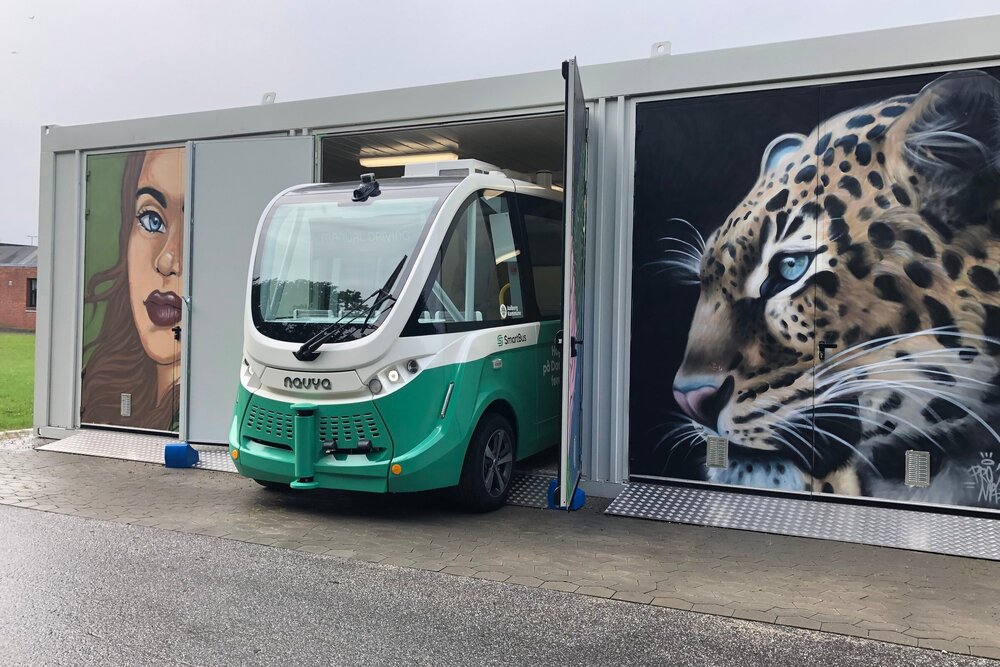
Navya SmartBus at Aalborg (Image: Holo)
EV Cartel: How are the current government regulations in terms of ease of implementation of projects in different cities? Is there a particular reason why you chose to deploy in the Scandinavia first?
Christian: We were in Scandinavia because that’s where our mother company is rooted. We’ve had approvals now in Norway, Sweden, Denmark, Finland, Estonia, Estonia, and the regulations are different in every country. You know we were based in Denmark and when we first applied, we thought it was going to take six months, but it took three years, which is completely unexpected. The process in Denmark is probably one of the most complicated in all of Europe. In Norway, we had a much easier time, we have a very good working relationship with the authorities, the same in Sweden, Finland, and Estonia. But, you know, we fly drones as well and there are European rules for how you can fly drones. But there are no European rules for Autonomous Vehicles. Now that Germany has their legislation in place, we hope that other countries will adopt and start making their regulations. The problem is that the people who had to approve our project, they didn’t have any guidelines about what the finish line is, what is the right place to end this and give the approval and that’s a huge challenge for us. But we’re seeing a change over time, it would be a big help for us if the regulations are in place soon.
EV Cartel: What do you feel is currently lacking in the system for supporting autonomous vehicle deployment on roads?
Christian: It is the technology that is keeping us behind. For example, if we could have slightly better vehicles, hardware wise and software wise, we would be able to deploy them. The customer requirements or the customer need is out there. Since these autonomous systems are too expensive, with the help of some funding, you do have a business case, especially in Scandinavia with high salaries and lack of enough people to drive buses. I think we’re going to see a breakthrough here by the year 2023-24. As some of the big players now are doing this, they will come up with higher levels of quality. Talking about the other parts of the system, we will always have to move to the resolve the next bottleneck, and it might appear somewhere in the system integrations, maybe in wide data collection or legislation. But these bottlenecks are easier to overcome. Once we have vehicles driving on the road and people start using them, we will have to take out the obstacles. I think this is going to be the next big milestone.
EV Cartel: Are there any pilot projects lined up in Europe?
Christian: Yes, definitely. With the kind of vehicles available right now, like Easymile or Navya, they’re doing projects in different places. There is a willingness to do this and hopefully we will. I have already talked about how there is a need for these technologies, and I am sure there are many such projects lined up.
EV Cartel: And what about Asia? Has it garnered interest?
Christian: Yeah, we’re talking to companies in China and Japan as well about what we might be able to do. Also, companies in the US, but most of them are focused on their own market first, they need to make it work where they are before they can consider scaling. We would hope to be a partner for going to Europe, for example, if you have experience in the US or experience in Asia, and you look at Europe as kind of a blank slate, with our experience it would be easier to deploy here in Europe. Then there’s the question of support, where distance is such a big problem. When you work with real vehicles, and especially across time zones, if I have a problem at eight o’clock in the morning in Oslo, it is one o’clock in the morning in the US East Coast, I need someone who can answer that question otherwise the vehicle is just standing still. That’s of course a big investment. If they train us to deploy their vehicle, we’ll be able to do it and not independently, but with their support.
EV Cartel: Do you collect data from your trials? How important is the data to implement pilot projects in different parts of the world? How do you plan to use the data?
Christian: I think this is one of our strongest points, that we collect the data from the vehicles, the telemetry data from all the driving scenarios and we’re not collecting it from the autonomous system like the LIDAR data. We care about all the events – like when it brakes too hard, when it goes out of autonomous mode etc. It’s the same data that the vehicle vendor gets, but what we do here is we sit and analyse it, in relation to the route and the context of where we’re driving. We combine that with the data we collect from the safety driver in the vehicle. Then we combine it with whatever other data is needed, like traffic data or the weather data. Later we sit and make weekly status meetings with our customers, where we analyse the problems like what is going wrong on this corner? Why are we going out autonomous mode and switching to manual mode on this corner or on this stretch? Or why are we driving slowly here and too fast through here? We’re the only ones who have that kind of the full overview of that data and this is what I think is going to be central to our role in the future. We send that data back to the vehicle vendors. With Navya, I can give you an example for this. When we see something in the vehicle that the vehicle doesn’t see itself, like a situation where someone falls over, we’ve registered it and we send it back. This is then combined with the data that Navya see and work on what is going wrong at that moment. This forms a good feedback loop and that is how it should be.
EV Cartel: How do you feel working with drones? Has it reached to an extent where you think it is safe to run it the cities or you want to limit the drone activities to the outskirts of the city?
Christian: We want to do both, and we are going to be doing both scenarios, running drones inside the city and outside the city limits. We are in the process in a project in Denmark called HealthDrone and we’re building up our permits gradually. We started in an airport, flying visual line of sight, as it’s called. It is the situation where we can still see it. We also flew it beyond visual line of sight in that airport, in a restricted area and now they’re flying in open airspace, visual line of sight, beyond visual line of sight on an island. What we’re waiting for right now is the final permit, which allows us to fly over an urban area. The drone that we’re flying will have a failsafe system and will have parachute release if the system fails. So, the worst thing that can happen is that you have a drone that falls. Safety is the most important thing and the authorities had pre-approved it and they think that it is an acceptable risk. And what we’re looking at now is we want to fly from a Danish Island into the Central Hospital in a city called Svendborg. There, we will be flying over the centre of the city to get into the hospital and if everything goes right, albeit the current chip shortage, we will be flying blood samples before the end of the year. That makes us someone who’s at the forefront of autonomous vehicles and drones in Europe today.
You must always assess the risks before implementing it. For example, I love Zipline and what they’ve been doing in Rwanda. I’m sure they must have made a risk assessment from the authority. There is always a risk like we don’t know everything about these drones, they may crash, but they’re flying over very lowly populated areas. But they’re flying to someone who might not get help at all and it’s a balance of risk. They decided that it would be worth the risk of flying as compared to the risk of someone dying, which I feel is the right decision.
EV Cartel: How do you envision the future of mobility, with the current trends that you see in Automotive world?
Christian: If you look back a year or two ago, it was mainly technology companies that had come out and said, we want to do autonomous. They were companies like Waymo, Cruise which is now owned by GM and such opportunities show there was always interest from the automotive industry, and they were dabbling it. Now I think we’re at a place where they can feel like they’ve got electric vehicles bit under control and now you can see that they want to implement the autonomous systems and do further research in autonomous driving. There’s no doubt that autonomous movements are going to happen. That’s a given now, it’s just a matter of how it’s going to happen. I can recollect while talking to some people the other day about Segway, everyone thought it was a big announcement, and everyone thought that the world’s going to change tomorrow, with the launch of Segway. But no one rides a Segway anymore. You find the police using it or mall security and that’s it. But the electric scooters that are in every major city now, many of them are built by Ninebot or Segway. So that technology became scooters in a simpler way. It was not the balancing, but it was putting the battery on two wheels, and this was the big innovation. So, that is a perfect analogy for what’s going to happen here. When you look at Waymo and what they are today, they’re driving 70 kmph down the road without a safety driver in Arizona and it’s amazing. We don’t need that; we just need 25 kmph and a stable service to help us run the shuttle in a suburban surrounding. We are ready to scale to 50 cars and it’s going to be something else as it meets reality. We will make adaptations to make that technology work. Then it’s going to sneak into the common world. We have a driverless Metro in Copenhagen and we’ve had that for 15 years. Now, no one cares about that. But sometimes you see tourists from other parts of the world who haven’t seen this before, they would sit up front and take pictures. This is very much similar and will arrive somewhere in five years or maybe just three years. You will get into the back of a car at some airport, and you sit inside to realise there’s no driver. Or you find driverless shuttle buses plying from the airport to the city. It is going to happen, and it will be normal in a few places whereas for others, it won’t happen this soon.
EV Cartel extends its heartfelt wishes to Christian and his team at Holo, wishing them more success and seeing more Autonomous Shuttle deployments by Holo all over Europe!!



 EV Cartel
Leave a comment